Intervista di Emiliano Tognetti
Al Festival della Mente, dedicato quest’anno al tema del fuoco, la guerra entra nel programma non soltanto come questione geopolitica, ma come esperienza capace di mettere alla prova convinzioni, identità e scelte personali. La XXIII edizione del Festival si è svolta a Sarzana dal 4 al 6 settembre 2026.
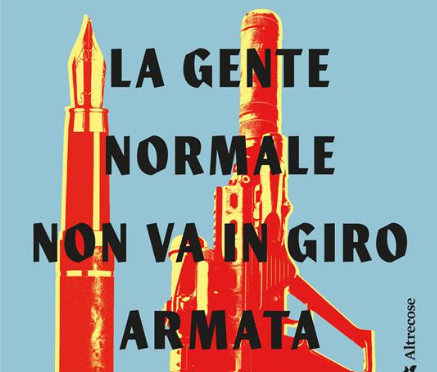
Tra gli ospiti c’è Artem Chapeye, scrittore e giornalista ucraino. Pacifista e critico nei confronti del nazionalismo e degli eserciti, dopo l’invasione russa dell’Ucraina del febbraio 2022 ha scelto di arruolarsi. Al Festival della Mente è protagonista, insieme all’inviato del Corriere della Sera Francesco Battistini, dell’incontro “Fuoco nemico”, dedicato al rapporto tra pacifismo e difesa, scelta personale e responsabilità collettiva, e alle contraddizioni che emergono quando gli ideali incontrano la violenza della guerra.
Noi di 7Gifts.org, durante la giornata di sabato 5 settembre, abbiamo avuto occasione di incontrarlo e di approfondire con lui alcuni dei temi al centro della sua esperienza personale e della sua riflessione sulla guerra, sul pacifismo e sulla pace.
Emiliano Tognetti: Artem, vorremmo partire proprio da questo punto. Prima dell’invasione russa eri un pacifista e poi hai scelto di arruolarti. Ti consideri ancora oggi un pacifista?
Artem Chapeye: Vorrei ancora che la pace arrivasse il prima possibile. Come scrivo nel mio libro, continuo ad aderire agli ideali pacifisti e continuo a considerarli molto nobili. Purtroppo, però, a volte semplicemente non bastano.
In passato ho partecipato in Ucraina alla resistenza nonviolenta e alle proteste, e hanno funzionato. Ma quando è iniziata la guerra ho capito che semplici petizioni, manifestazioni, proteste davanti a un’ambasciata o persino scioperi della fame non sono sufficienti se vuoi impedire che il tuo popolo venga torturato o vuoi fermare delle forze di occupazione.
Continuo ad avere un grandissimo rispetto per le idee di Mahatma Gandhi. Allo stesso tempo mi sono chiesto che cosa accadesse di fronte a situazioni come quella della Seconda guerra mondiale e mi sono reso conto che persone come Hitler dovevano comunque essere fermate.
Quindi continuo a pensare che gli ideali pacifisti e la resistenza nonviolenta siano i metodi migliori nella maggior parte delle situazioni. Ma in alcune circostanze – per esempio quando il tuo Paese viene invaso e i tuoi figli sono direttamente minacciati – sei costretto a compiere scelte più difficili.
Emiliano Tognetti: È possibile continuare a riconoscere l’umanità della persona che combatte dall’altra parte senza, allo stesso tempo, relativizzare l’aggressione che il tuo Paese ha subito?
Artem Chapeye: Sì. Nella pratica ho avuto a che fare con prigionieri di guerra russi e sono rimasto sorpreso nel vedere come quella massa indistinta che percepisci come una forza d’invasione si trasformi, quando incontri le singole persone, in esseri umani spesso molto infelici.
Abbiamo cercato di trattarli in maniera molto umana. Personalmente sono persino uscito a comprare delle sigarette per loro.
La cosa più importante che ho capito è che non provo nemmeno una grande rabbia o aggressività nei loro confronti. Direi piuttosto che provo pietà: mi dispiace che si trovino a fare ciò che stanno facendo.
Ma questa pietà non ti impedisce di combatterli e di respingerli. Credo che sia possibile continuare a vedere il proprio nemico come un essere umano. Questo, però, non cambia il fatto che devi respingerlo.
Emiliano Tognetti: In Europa discutiamo continuamente se l’Ucraina debba continuare a combattere oppure cercare un compromesso. Che cosa manca inevitabilmente a questo dibattito quando viene condotto da persone che possono spegnere la televisione o internet e tornare alla propria vita normale?
Artem Chapeye: La prima cosa che mi viene in mente è che dovrebbero essere gli ucraini a decidere se continuare a combattere oppure no, perché siamo noi a comprendere le conseguenze.
Se qualcuno dice: «Non sosteniamo più l’Ucraina e avremo, per esempio, benzina meno cara», quella decisione non ha per lui le stesse conseguenze che avrebbe per noi.
Se noi smettessimo di combattere, le conseguenze potrebbero essere l’occupazione e la tortura. I miei figli, per esempio, potrebbero essermi portati via e rieducati affinché credano di essere russi.
Vediamo che sotto occupazione la Russia porta via dei bambini e cerca di rieducarli. Perciò, quando qualcuno in Occidente, o comunque fuori dall’Ucraina, discute se l’Ucraina debba smettere di combattere, per noi questo può apparire piuttosto assurdo.
Credo che, in realtà, non abbiamo molta scelta. Non è tanto una questione di coraggio degli ucraini. È piuttosto che, a volte, chi si trova fuori dal Paese non comprende davvero la situazione.
La scelta, per noi, è semplicemente continuare a esistere.
Abbiamo visto che cosa accade sotto occupazione: persone messe in prigione senza motivo, persone torturate, bambini sottratti alle proprie famiglie.
Guardate anche ciò che accade alle persone a Gaza che non sono in grado di proteggersi: è facile provare solidarietà nei loro confronti. Allo stesso modo sarebbe facile dire, dopo che gli ucraini avessero smesso di combattere, «siamo solidali con loro». Ma per noi, a quel punto, le conseguenze sarebbero già avvenute.
Emiliano Tognetti: Dopo anni di guerra, che cosa significa oggi per te una giornata normale? Che cos’è una giornata “normale” in Ucraina?
Artem Chapeye: Ti faccio un esempio.
In Ucraina l’anno scolastico tradizionalmente comincia il primo settembre. Quest’anno, però, a Kyiv le scuole non hanno aperto perché eravamo sotto attacchi di droni russi da quasi una settimana ed è stato ritenuto troppo pericoloso mandare i bambini a scuola.
Quando pianifichi di andare da qualche parte a Kyiv devi inoltre tenere presente che i ponti potrebbero essere chiusi o che la metropolitana potrebbe fermarsi a causa degli allarmi aerei.
Allo stesso tempo, nonostante tutto questo, proviamo comunque a vivere. A volte usciamo, andiamo nei caffè, cerchiamo di conservare una certa normalità.
Devi anche considerare che intorno alle undici di sera tutto chiude per il coprifuoco notturno. È una vita quotidiana molto diversa da quella che vedete qui in Italia.
Emiliano Tognetti: Quando arriverà la pace, ricostruire città e infrastrutture sarà qualcosa di relativamente facile da misurare. Ma come si ricostruisce la fiducia tra le persone dopo che una guerra ha diviso famiglie, comunità e identità?
Artem Chapeye: Credo che serviranno generazioni.
Se parliamo di ricostruire una qualche forma di fiducia tra russi e ucraini, penso che prima di tutto il governo e lo Stato russo dovrebbero riconoscere di aver commesso atrocità e crimini di guerra.
I responsabili di questi crimini dovrebbero essere processati. Qualcosa di simile a ciò che è accaduto in Germania dopo la Seconda guerra mondiale o ai processi che hanno riguardato persone come Slobodan Milošević e Ratko Mladić, o i responsabili del genocidio in Ruanda.
Purtroppo, al momento non vediamo accadere niente del genere. E credo che questo danneggi soprattutto il futuro della Russia.
Al momento non vedo come i rapporti tra ucraini e russi possano essere ricostruiti senza che persone come Putin e i suoi generali siano portate davanti alla giustizia.
Emiliano Tognetti: Prima dell’invasione la pace era un ideale nel quale credevi profondamente.
Artem Chapeye: Ci credo ancora.
Emiliano Tognetti: Ma oggi pensi alla pace nello stesso modo in cui ci pensavi prima del febbraio 2022?
Artem Chapeye: Credo di avere oggi una concezione un po’ più ampia della pace.
Ho capito che il semplice fatto che non si stia sparando non significa necessariamente che ci sia pace.
Per esempio, se Mariupol in questo momento non viene bombardata perché i russi l’hanno occupata, questo non significa che a Mariupol ci sia pace. Significa, per esempio, che dei bambini possono essere sottratti alle loro famiglie.
La pace, quindi, non significa soltanto non sparare. Significa avere sicurezza. Significa poter essere certi che nessuno ti costringerà illegalmente a fare qualcosa, che non sarai obbligato a diventare ciò che non sei e che i tuoi figli non saranno strappati alla tua famiglia.
In sostanza, la pace significa sicurezza più giustizia.
Emiliano Tognetti: Grazie.
Artem Chapeye: Grazie.
ENGLISH
Artem Chapeye: “Peace Is Not Just About Stopping the Shooting. It Means Security and Justice”
Interview by Emiliano Tognetti
Sarzana, September 5, 2026 — At this year’s Festival della Mente, whose theme is “fire,” war enters the programme not merely as a geopolitical issue, but as an experience capable of challenging convictions, identities and personal choices. The 23rd edition of the Festival took place in Sarzana from September 4 to 6, 2026.
Among the guests was Artem Chapeye, a Ukrainian writer and journalist. A pacifist and long critical of nationalism and armies, he chose to enlist after Russia’s invasion of Ukraine in February 2022. At the Festival della Mente, he joined Corriere della Sera war correspondent Francesco Battistini for “Fuoco nemico” (“Enemy Fire”), a conversation about pacifism and defence, personal choice and collective responsibility, and the contradictions that emerge when ideals encounter the violence of war.
We at 7Gifts.org had the opportunity to meet him during the day on Saturday, September 5, and to explore with him some of the themes at the heart of his personal experience and his reflections on war, pacifism and peace.
Emiliano Tognetti: Artem, we would like to start precisely from this point. Before the Russian invasion, you were a pacifist, and then you chose to enlist. Do you still consider yourself a pacifist today?
Artem Chapeye: I still want peace to come as soon as possible. As I write in my book, I still adhere to pacifist ideas, and I continue to believe that they are very noble. Unfortunately, however, sometimes they simply are not enough.
In the past, I took part in nonviolent resistance and protests in Ukraine, and they worked. But when the war began, I understood that simple petitions, demonstrations, protests outside an embassy, or even hunger strikes are not enough if you want to stop your people from being tortured or stop an occupying force.
I still have enormous respect for Mahatma Gandhi’s ideas. At the same time, I began to think about situations such as the Second World War, and I realised that people like Hitler still had to be stopped.
So I continue to believe that pacifist ideas and nonviolent resistance are the best methods in most situations. But in some circumstances – for example, when your country is being invaded and your children are directly threatened – you are forced to make more difficult choices.
Emiliano Tognetti: Is it possible to continue seeing the humanity of the person fighting on the other side without, at the same time, minimising the aggression that your country has suffered?
Artem Chapeye: Yes. In practice, I had dealings with Russian prisoners of war, and I was surprised to see how that general mass you perceive as an invading force breaks down, when you meet individuals, into human beings who are often very unhappy.
We tried to treat them in a very humane way. Personally, I even went out and bought cigarettes for them.
The most important thing I realised was that I do not even feel a great deal of anger or aggression towards them. I would rather say that I feel pity. I feel sorry that they are doing what they are doing.
But this pity does not prevent you from fighting them and repelling them. I think you can still see your enemy as a human being. That does not, however, change the fact that you have to repel them.
Emiliano Tognetti: In Europe, we constantly debate whether Ukraine should continue fighting or seek a compromise. What is inevitably missing from that debate when it is conducted by people who can turn off the television or the internet and go back to their normal lives?
Artem Chapeye: The first thing that comes to mind is that it should be up to Ukrainians to decide whether to continue fighting or not, because we are the ones who understand the consequences.
If someone says, “Let’s stop supporting Ukraine so that, for example, we can have cheaper gasoline,” that decision does not have the same consequences for that person as it does for us.
If we stopped fighting, the consequences could be occupation and torture. My children, for example, could be taken away from me and re-educated to believe that they are Russians.
We see that under occupation Russia takes children away and then tries to re-educate them. So when somebody in the West, or anyone outside Ukraine, debates whether Ukraine should stop fighting, to us this can seem quite absurd.
I believe that, in reality, we do not have much of a choice. It is not so much a question of Ukrainian bravery. Rather, sometimes people outside the country do not really understand the situation.
For us, the choice is simply to continue existing.
We have seen what happens under occupation: people are imprisoned for no reason, people are tortured, children are taken away from their families.
Look also at what is happening to people in Gaza who are unable to protect themselves: it is easy to sympathise with them. In the same way, it would be easy to say, after Ukrainians had stopped fighting, “We sympathise with them.” But for us, by that point, the consequences would already have happened.
Emiliano Tognetti: After years of war, what does an ordinary, normal day mean to you now? What does a “normal” day in Ukraine look like?
Artem Chapeye: Let me give you an example.
In Ukraine, the school year traditionally starts on September 1. This year, however, schools in Kyiv did not open because we had been under Russian drone attacks for almost a week, and it was considered too dangerous for children to go to school.
When you plan to go somewhere in Kyiv, you also have to take into account that bridges may be closed or that the subway may stop because of air-raid alerts.
At the same time, despite all of this, we still try to live our lives. Sometimes we go out, we go to cafés, we try to preserve a certain degree of normality.
You also have to remember that at around eleven o’clock at night everything closes because of the curfew. Everyday life is very different from what you experience here in Italy.
Emiliano Tognetti: When peace eventually comes, rebuilding cities and infrastructure will be relatively easy to measure. But how do you rebuild trust between people after a war has divided families, communities and identities?
Artem Chapeye: I think it will take generations.
If we are talking about rebuilding some kind of trust between Russians and Ukrainians, then I think that, first of all, the Russian government and the Russian state would have to recognise that atrocities and war crimes were committed.
The perpetrators of these crimes would have to be brought to trial. Something similar to what happened in Germany after the Second World War, or to the proceedings involving people such as Slobodan Milošević and Ratko Mladić, or those responsible for the Rwandan genocide.
Unfortunately, at the moment, we do not see anything like that happening. And I think this damages Russia’s future most of all.
At the moment, I do not see how relations between Ukrainians and Russians can be repaired without people such as Putin and his generals being brought to justice.
Emiliano Tognetti: Before the invasion, peace was an idea you strongly believed in.
Artem Chapeye: I still do.
Emiliano Tognetti: But do you understand peace today in the same way you did before February 2022?
Artem Chapeye: I think I understand peace a little more broadly now.
I have understood that simply because there is no shooting, it does not necessarily mean that there is peace.
For example, if Mariupol is not being bombed at the moment because the Russians have occupied it, that does not mean there is peace in Mariupol. It means, for example, that children can be taken away from their families.
So peace does not simply mean not shooting. It means having security. It means being sure that nobody will illegally force you to do something, that you will not be forced to become something you are not, and that your children will not be taken away from your family.
Basically, peace means security plus justice.
Emiliano Tognetti: Thank you.
Artem Chapeye: Thank you.
Be the first to comment on "Artem Chapeye: «La pace non è soltanto smettere di sparare. È sicurezza e giustizia»"